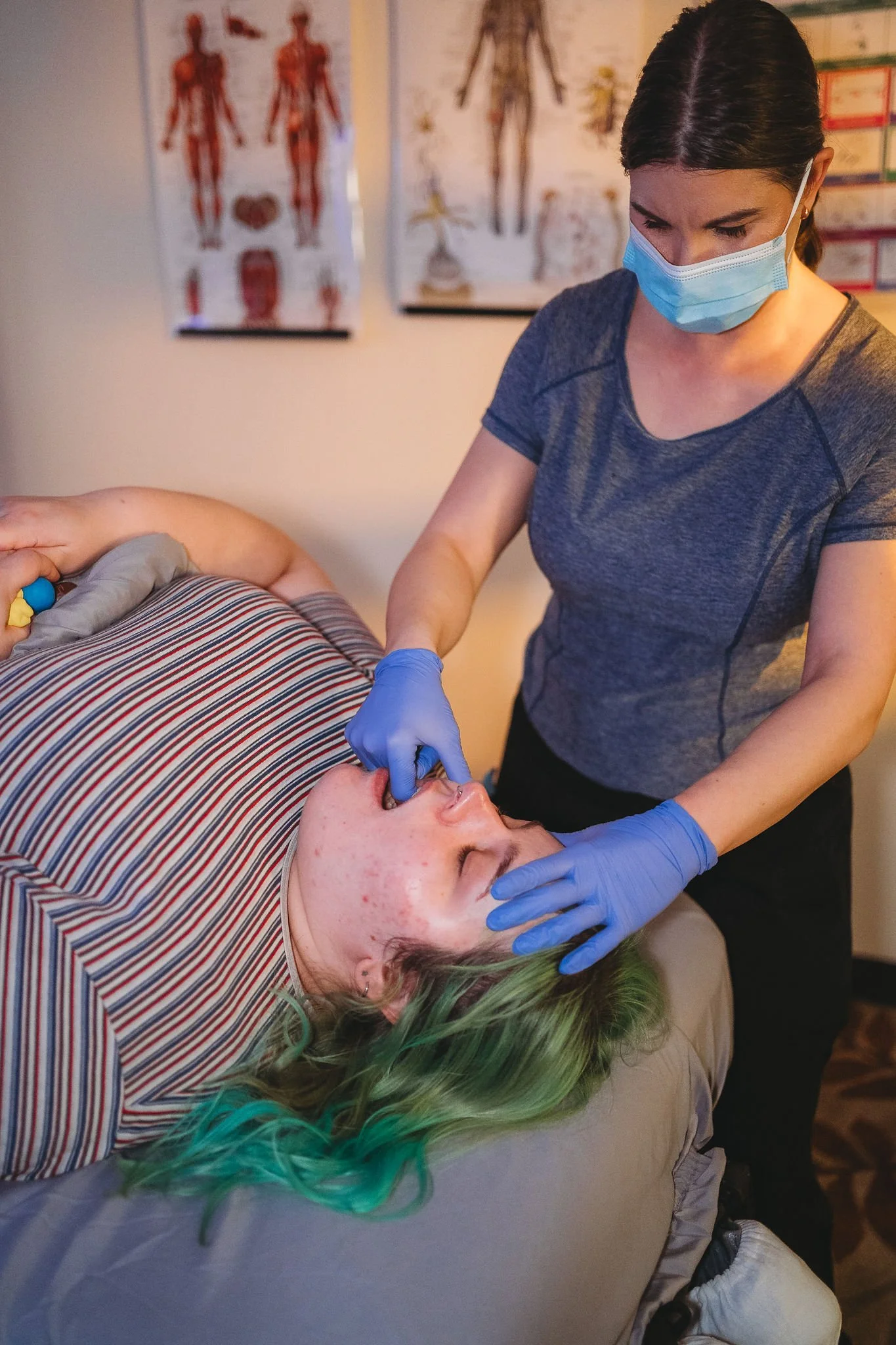
Intraoral massage is exactly what it sounds like: massage that involves working inside your mouth. I perform this massage wearing an N95 mask and gloves. Many clients are surprised at the immediate relief they get from intraoral massage. While working the outside of the muscles can offer slight relief, similar to botox, by going inside the mouth I am able to release very small muscles and expand your temporomandibular joint (TMJ). Instead of working on the symptoms, we get to the root cause. Once you have room in your jaw and your muscles are no longer as tense and stiff, you may notice an increase range of motion such as opening your mouth wider, more blood flow to the face, and better posture. This technique can be especially helpful for deeper jaw muscles that are difficult to reach from the outside, including muscles involved in clenching and chewing. For some people, this approach can feel like it gets to the root of the tension in a way that surface work cannot. It is a focused, specialized technique that is always used with care and consent. This is NOT a relaxing massage, it will be uncomfortable and it will cause inflammation.
What makes it different
External massage can address the jaw, neck, and facial muscles, but intraoral work reaches areas inside the cheeks and along the deeper jaw muscles, joints, and bones. That can be especially useful when tension feels “stuck” or hard to release. If you’ve ever had any dental surgery or told you have a narrow palate, misaligned jaw, or had braces you may benefit from intraoral massage because those muscles have been in a cramped and tight holding pattern that only creates more tension over time. Even if you have not had any major dental work you may still benefit because the muscles involved in chewing are active every day, they can become the “work horse” muscles that keep on going and develop tightness just like any other muscle. Intraoral work may help reduce that holding pattern and create more ease around opening and closing the mouth.
Who may benefit
Anyone who has had any major dental work (braces, root canal, extracted teeth, etc…), surgeries, has been told they have a misaligned jaw, narrow palate, teeth grinding, jaw clenching, or TMJ-D.
If you ever wore or currently wear a retainer, mouth guard, Invisalign, CPAP, or other mouth devices intraoral may be a good option for you.
If you clench your teeth, grind at night, have previously cracked teeth due to clenching, experience jaw fatigue, sip from a straw (if you drink from a Stanley water bottle or use straws almost exclusively), or feel tenderness in the cheeks and jaw intraoral may be a good fit for you.
Many people often find intraoral work helpful. It may also support people with facial tension, headaches related to jaw strain, or restricted mouth opening. That said, it is not the right fit for everyone, and it should always be discussed beforehand with clear communication about comfort and boundaries. In trauma-informed care, choice and predictability matter just as much as technique. As I previously mentioned, this is not a relaxing massage and we take many breaks throughout the massage so you can integrate the new experience (especially during the first few sessions).
What it may feel like
Depending on the severity and complexity of the muscles, it may range from mildly uncomfortable to excruciatingly painful. My goal is to work with you to find a happy medium. When going inside the mouth, inflammation and irritation will occur so it’s always recommended to take an anti-inflammatory an hour before your appointment. Many clients describe this as deeply relieving, unusually precise, or more effective than expected.
Everyone is also shocked by how teary eyed they get and will wipe away tears. I will always hand you a tissue (or two) before we begin. This is because everything is condensed inside the face and there are very delicate nerves. This is an automatic response but don’t be surprised if you start to cry or need a break from the intensity of pain.
Because the work targets muscles that are not easily accessed otherwise, it can create a strong sense of release. At times, that release may feel subtle; at other times, clients notice a dramatic difference in jaw tension, facial softness, or more release in their neck and shoulders. The goal is never to push through pain, but to work at a level the tissue and nervous system can tolerate.
Why this matters
When a jaw has been holding tension for a long time, it often needs more than general relaxation cues. It may need specific attention to the muscles that are doing the gripping. Intraoral massage can be one piece of a larger TMJ care plan that also includes posture work, nervous system support, and lifestyle awareness (including less straws). That integrated approach is often where the most sustainable relief begins.
Closing Thoughts
Intraoral massage can be a powerful option for anyone. If you’ve had major dental work, experience headaches, have stiff neck muscles, or want to try a new approach to treat jaw, head, and neck pain this may be right for you. If your jaw feels tight, fatigued, or overworked, this may be a supportive next step.
Click below to book your TMJ-D massage and experience what it’s like to have ease in your jaw.