What Is Trauma-Informed Massage — And Why It Matters
If you've ever felt anxious about getting a massage, tensed up on the table without knowing why, or left a session feeling worse instead of better? You're not alone. And it's not you. It may simply mean that the approach wasn't the right fit for your nervous system.
That's where trauma-informed massage comes in.
At Elevate Healing Arts in Chicago's Lakeview neighborhood, every session is built on a trauma-informed foundation. But what does that actually mean, and why does it matter so much?
If you've ever felt anxious about getting a massage, tensed up on the table without knowing why, or left a session feeling worse instead of better. You're not alone. And it's not you. It may simply mean that the approach wasn't the right fit for your nervous system.
That's where trauma-informed massage comes in.
At Elevate Healing Arts in Chicago's Lakeview neighborhood, every session is built on a trauma-informed foundation. But what does that actually mean and why does it matter so much.
What "Trauma-Informed" Actually Means
Trauma-informed care is a framework that recognizes how widespread trauma is and how deeply it can live in the body. It shifts the question from "What's wrong with you?" to "What happened to you and how can we work together in a way that feels safe?"
In a trauma-informed massage setting, this shows up in concrete, tangible ways:
You are always in the driver's seat. Nothing happens to your body without your input. The session is directed by you and guided by your therapist.
Consent is ongoing, not a one-time checkbox. Your therapist checks in throughout the session, not just at the beginning, especially when transitioning to a new area of the body.
Your nervous system's cues are treated as communication. If your body tenses, guards, or reacts: that's information, not a problem to push through.
There is no "standard protocol." Every session is built around what you need that day, in that moment.
This is fundamentally different from traditional spa massage, which often follows a set routine regardless of how the client's body is responding in real time.
Why Trauma Lives in the Body, Not Just the Mind
Modern neuroscience and somatic research have given us a much clearer picture of how trauma works: it isn't only a mental or emotional experience. It encodes itself in the body. This can be experienced in the way muscles hold tension, in how the nervous system responds to touch, in patterns of bracing, collapse, or dissociation that can happen without any conscious awareness.
This means that talk therapy alone often isn't enough to fully process a traumatic experience. And it also means that bodywork when done with care and attunement can be a powerful part of the healing process.
Trauma-informed massage doesn't try to "fix" trauma. Instead, it creates conditions where the body can begin to feel safe again. And from that place of safety, real change becomes possible.
What a Trauma-Informed Session Looks Like at Elevate Healing Arts
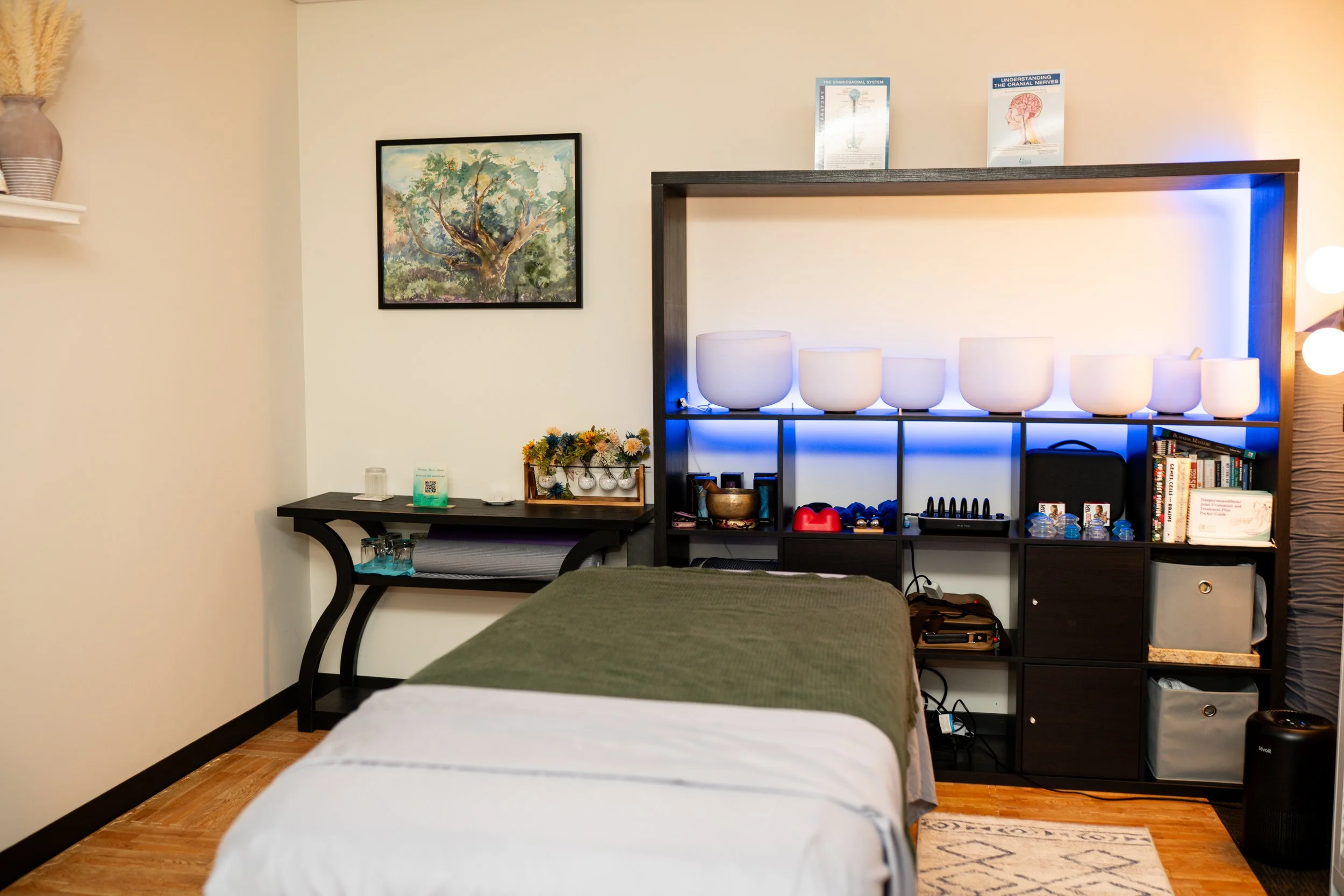
At Elevate Healing Arts, sessions don't look like your typical "lay on the table and zone out" experience and that's intentional.
Here's what you can expect:
Before we begin: We set an intention together. How are you feeling right now? What do you want to get out of our time together? What do you want to feel like when you leave? What areas feel like they need attention and what areas, if any, feel off-limits today? We use the present to help guide the session.
During the session: You'll be asked questions like: Does what I'm doing right now feel safe? Is this helpful, or does it feel threatening? Your feedback shapes every moment of the work. If something doesn't feel right, we stop, adjust, or move on — no pressure, no pushing through.
After the session: We briefly check in. How did that feel? What beliefs, patterns, or emotions came up? Is there anything you want to note for next time?
Sessions are 50 or 80 minutes and held at our studio at 2835 N. Sheffield in Chicago's Lakeview neighborhood.
Who Benefits From Trauma-Informed Massage?
Trauma-informed massage isn't only for people who identify as trauma survivors (though you are absolutely welcome here). It's a good fit if you:
Experience anxiety, hypervigilance, or difficulty relaxing
Have chronic pain or tension that doesn't respond to standard massage
Live with an autoimmune condition, functional neurological disorder (FND), Long-COVID, or chronic illness
Are navigating grief, burnout, or a major life transition
Identify as LGBTQ+, BIPOC, or are seeking gender-affirming, culturally sensitive care
Have had uncomfortable or boundary-violating experiences during bodywork before
Simply want to feel more at home in your own body
You don't need a diagnosis or a history to deserve a safe, attuned experience. Everyone's nervous system benefits from feeling truly seen and respected.
Ready to Experience the Difference?
If you've been curious about massage therapy but weren't sure if it was the right fit or if you've tried massage before and it didn't feel quite right, I'd love to connect.
I offer a complimentary 15-minute consultation so we can talk about your needs, answer your questions, and make sure we'd be a good match before you ever get on the table.
And if you're ready to jump in, new clients can book a 1-hour customized massage at a special introductory rate no experience with bodywork required, just an open mind.